
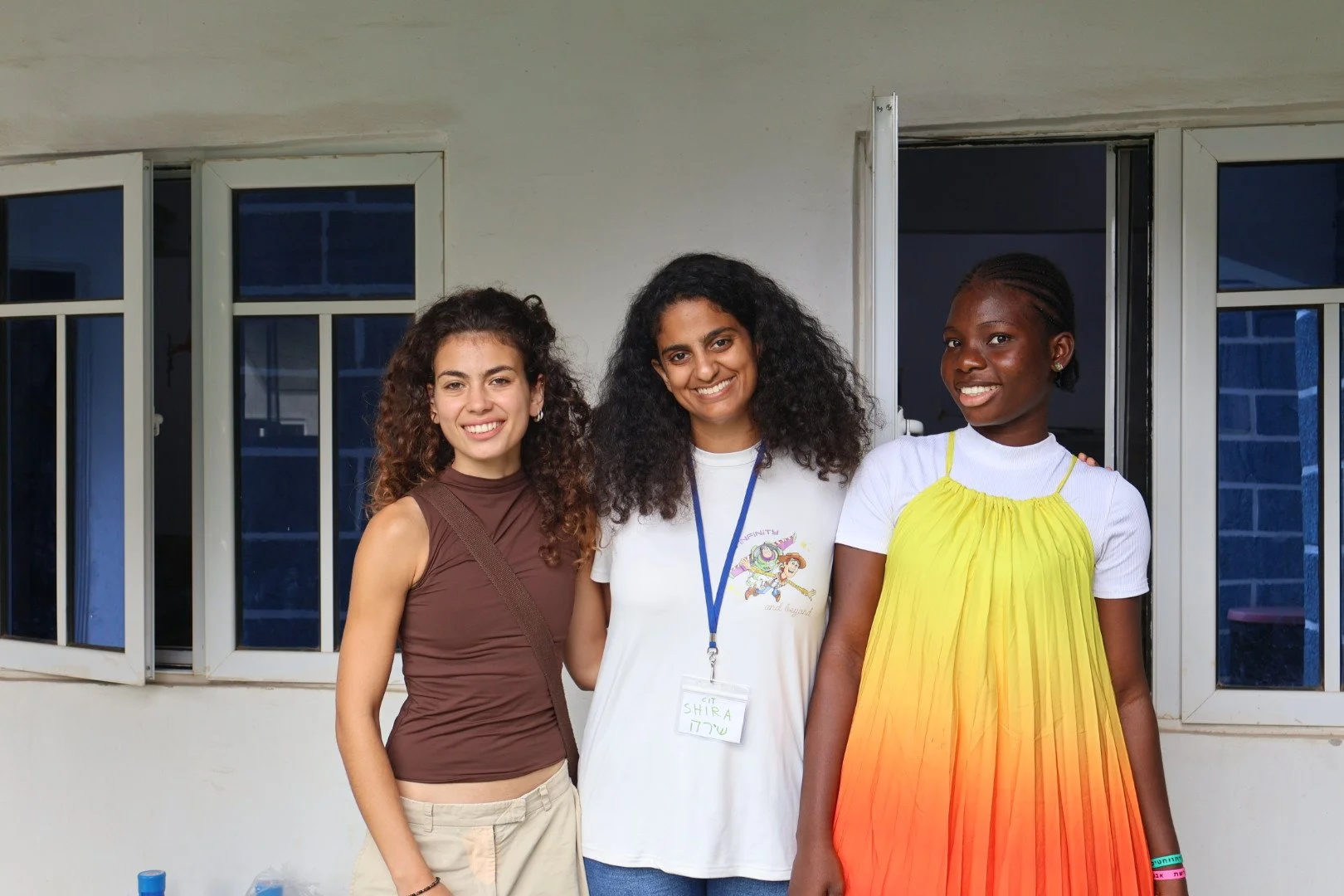
A Reflection from Mia Maayan
Rarely in my life have I had no reference point. After our first night in Abuja, we walked to morning service from the hotel.
Dry Textures, sweet smells, the roasted corn and catfish offered to me by local vendors, goats eating from plastic buckets, blue and yellow lizards crossing the road following my dusty flip-flops. All of it, in its essence: remarkably foreign.
As the road unfolded and I was holding tighter to my newly found Nigerian co-workers, I started noticing that here I was not only just another backpacker, a westerner consumer hunting for mobile service and lucky charms. Here I was also being observed. And every time a bypasser looked into my eyes, she found them in their essence:
remarkably foreign.
We reached the synagogue. Women in the back, men in the front. The bimah in the center, the Torah closet behind. We opened the book, and the words of the prayers rose in Hebrew.
They turned toward Jerusalem, toward Zion and the returning of its ancient people to Israel. Knowing when to bow, when to cover our faces, when to stay silent, kiss the Torah, and say Shabbat Shalom. While little girl fingers played with my hair in awe, her mother and I were crying to the same God.
And suddenly, I was inside every synagogue I had ever visited in my life. Suddenly, it did not feel foreign at all.
Remarkable.
I spent three weeks in Nigeria, taking part in Camp Sarah. A Jewish day-camp for local children, celebrating and affirming their identity through songs, crafts, and storytelling. A vibrant oasis where Judaism stood at the center in a country mostly consisting of Muslim and Christian faith.
Here I met a wonderful community that made my world expand and contract all at once.
As a Jewish hippie who travels a lot, I thought I had a pretty good understanding of what a strong community meant for the quality of a human life. But being invited into the fellowship surrounding Camp Sarah, I caught a glimpse of something new in the way people moved together
The individuals I met; each and every one with different personalities, struggles, dreams and personal tastes, formed a human safety net strong enough to heal the sick, carry the tired, and praise the exalted. Being invited into this circle was humbling.
I thought I knew how to move my hips: they proved me wrong. I thought I liked spicy food: they proved me wrong.
I thought I was street smart: but one 10-year-old with a football was enough to prove me completely wrong.
I found myself met, held, challenged by, laughing with, crushing on, and feeling seen by a group of young adults like myself, that quickly went from co- workers making sure I made it across the road in one piece, to companions … though still making sure I got over the road …
I got to experience my own introverted boundaries being crossed, as well as my attitudes towards problem-solving, child-raising, and pace-keeping. It’s not easy to realize that things are and can be different, if you let them be. And it can be even harder to figure out when it’s appropriate to compromise on your own standards, boundaries, and beliefs… and when it isn’t.
Do I rush the kids to the next activity to maintain schedule? Or do I peel an extra banana while witnessing small séances of dance and play unfolding in the courtyard?
Do I insist on paying for my own $1 beer knowing the difference in wages? Or do I let my local friends take me out, enjoying their kind and consistent generosity?
Do I happily let the younger sisters of camp braid my hair outside the hotel after a day of work to the sound of Pidgin English joke-cracking, Omah Lay and Rema? Or do I decline while trying to explain how in ‘reality’ it’s disrespectful of their culture, and will likely earn me judgmental stares on the metro from Copenhagen Airport to Nørreport station?
In Nigeria I learned that being ‘brown’ in Europe doesn’t make me not ‘white’
I learned that being from a Western country doesn’t make me more up to date or give me a more refined character.
I learned that being Jewish doesn’t alienate me from society, but connects me to an international network of solidarity and culture.
And that being all of the above come second to the fact of being human.
A heartfelt thank you to the organizers of Camp Sarah and the local staff for letting us step inside. The difference this camp makes for everyone participating is unmistakable.
And I am better for it.
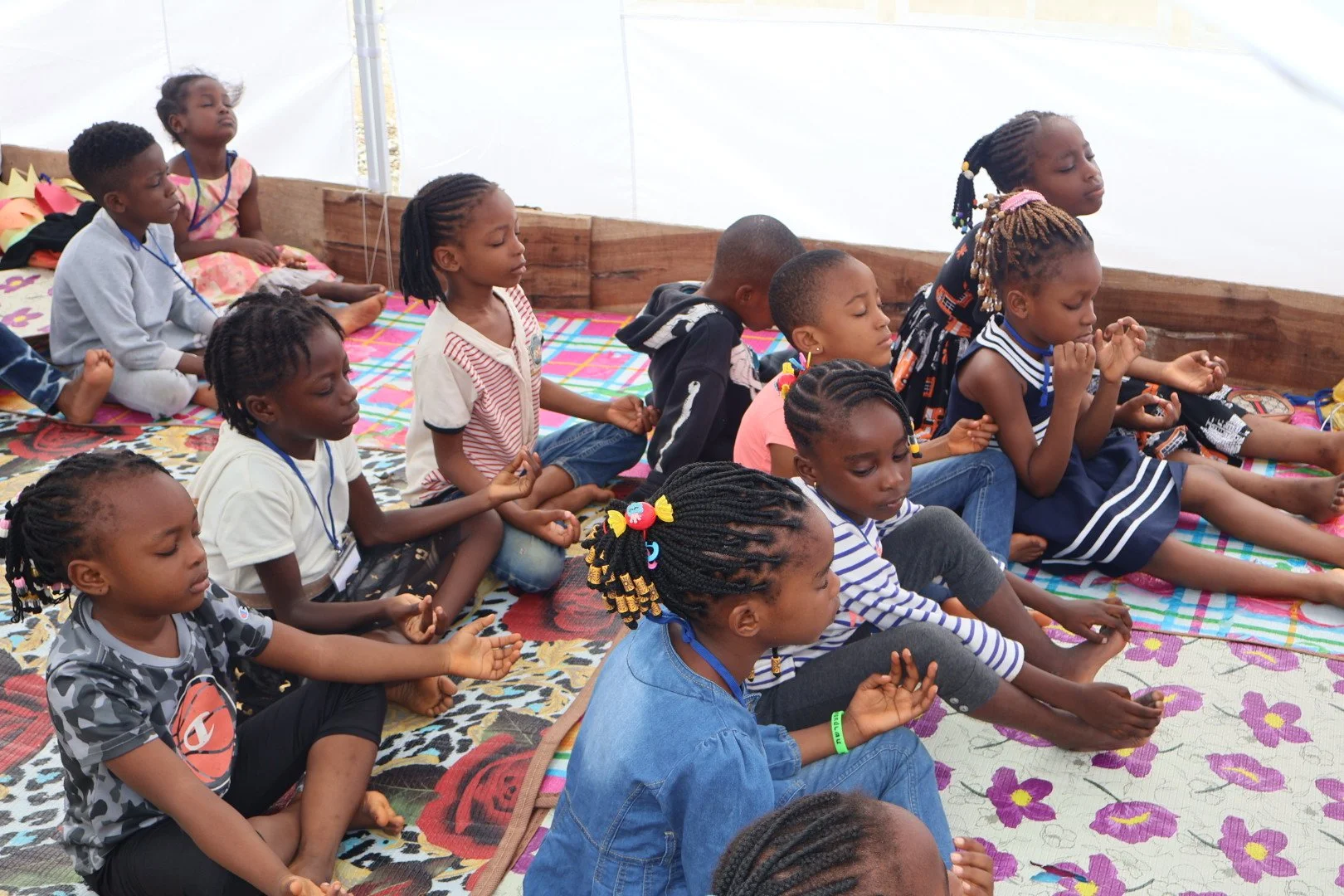
What Camp Sarah Teaches us About Life
When people hear the word "camp," they usually think of games, rooms full of noise, rushing to the kitchen for meals, and maybe even a little chaos. But camp is actually more than just that. It’s like a mini version of life. And if you pay attention, Camp Sarah actually teaches us lessons you can also find in Judaism.
One of the lessons is Teamwork. At Camp Sarah nothing works without teamwork. Whether it’s sharing a room, finishing chores, or playing games, we learn quickly that we need each other. In Judaism, there’s a value called Arevut that is Mutual Responsibility. It teaches that all Jews are responsible for one another. Camp Sarah makes us practice that we don’t just take care of ourselves but we support the group. Sarah, our matriarch, was known for welcoming others into her tent. Teamwork starts with that same spirit of caring for each other.
Another lesson is Resilience. Camp is not always easy. The schedules, the noise, sometimes you just want to give up. But every time we push through, we grow stronger. Judaism teaches emunah – faith in tough times. Like Sarah, who faced challenges but never gave up, we learn at Camp Sarah that resilience means keeping faith and moving forward.
The third lesson is Joy in small things. One of the best parts of Camp Sarah is the small joy that is late-night laughter in the rooms, cheering of your team, or just sharing a snack with friends. Judaism calls this Simcha, finding joy in simple moments. Camp Sarah reminds us that happiness doesn’t come from big events only but also from appreciating the little blessings around us.
In conclusion, camp is about fun and activities but it’s also a classroom without walls. Camp Sarah teaches us teamwork, tolerance, and joy—the same lessons Judaism has passed down for generations. If we carry those lessons with us, Camp Sarah won’t just be a memory, it’ll be a guide for how to live.
A note from Ariela and Leah, CITs from kaityz 2025:
When people hear the word "camp," they usually think of games, rooms full of noise, rushing to the kitchen for meals, and maybe even a little chaos. But camp is actually more than just that. It’s like a mini version of life. And if you pay attention, Camp Sarah actually teaches us lessons you can also find in Judaism.
One of the lessons is Teamwork. At Camp Sarah nothing works without teamwork. Whether it’s sharing a room, finishing chores, or playing games, we learn quickly that we need each other. In Judaism, there’s a value called Arevut that is Mutual Responsibility. It teaches that all Jews are responsible for one another. Camp Sarah makes us practice that we don’t just take care of ourselves but we support the group. Sarah, our matriarch, was known for welcoming others into her tent. Teamwork starts with that same spirit of caring for each other.
Another lesson is Resilience. Camp is not always easy. The schedules, the noise, sometimes you just want to give up. But every time we push through, we grow stronger. Judaism teaches emunah – faith in tough times. Like Sarah, who faced challenges but never gave up, we learn at Camp Sarah that resilience means keeping faith and moving forward.
The third lesson is Joy in small things. One of the best parts of Camp Sarah is the small joy that is late-night laughter in the rooms, cheering of your team, or just sharing a snack with friends. Judaism calls this Simcha, finding joy in simple moments. Camp Sarah reminds us that happiness doesn’t come from big events only but also from appreciating the little blessings around us.
In conclusion, camp is about fun and activities but it’s also a classroom without walls. Camp Sarah teaches us teamwork, tolerance, and joy—the same lessons Judaism has passed down for generations. If we carry those lessons with us, Camp Sarah won’t just be a memory, it’ll be a guide for how to live.

Camp Sarah: A Jewish Summer Camp Grows in Africa.
Camp Sarah first bloomed in the minds of rhapsodic volunteers, a tiny passing thought that slowly grew into a becoming idea and an eager dream till it blossomed into an outstanding magnificent event that would remain in the minds of everyone who had the opportunity to attend the camp.
Camp Sarah first bloomed in the minds of rhapsodic volunteers, a tiny passing thought that slowly grew into a becoming idea and an eager dream till it blossomed into an outstanding magnificent event that would remain in the minds of everyone who had the opportunity to attend the camp.
A Jewish educational and cultural camp for children aged 5–16 from the Nigerian Jewish community, Camp Sarah is rooted in Jewish traditions and values, offering meaningful educational and fun experiences aimed to foster personal growth, a cohesive community, and a love for Judaism. Born with the intention to unify the Jewish communities in Nigeria and connect the Jewish communities to the international community, Camp Sarah held its very first Jewish camp for Nigerian Jewish children in the Summer of 2023.
Camp Sarah’s staff consisted of an all-volunteer group of twenty-four persons, both Nigerian Jewish youths and Jews from aboard. The camp was held on the premises of Tikvet Israel synagogue in Kubwa, Abuja Nigeria, from August 21–26 2023 for forty campers. Elder Habakkuk and his wife were kind enough to host the camp at their synagogue, an act of kindness that was much appreciated.
The campers were divided into three Edot (age groups): Chatulim (5–8-year-olds), Great Stars (9–12-year-olds), and Ikar (13–16-year-olds).
Every day at camp had a theme focusing on 1–2 Jewish holidays. Each Edah had specific teachings and activities in accordance with the day’s theme to foster learning. The youngest, Chatulim focused mainly on the holidays themselves, which includes stories and Midrash. The middle, Great Stars, focused on the use of tefillah and Torah studies to foster understanding for ben-bat mitzvah preparation. And the oldest, Ikar, focused on text studies drawn from the Torah, tefillah, Talmud, and more to foster understanding and teamwork among themselves.
While the structure of the week followed the rhythm of the Jewish year through the holidays, each guiding theme was in both Hebrew and English with respect to understanding how the Judaism of our tradition can be woven with the Judaism of our daily lives.
On Monday, the theme of the day was Teshuvah (respect) focusing on the first three holidays of the year: Rosh Hashanah, Yom Kippur, and Sukkot. On Tuesday, it was Gevurah (strength): Simchat Torah and Hanukkah, and on Wednesday was Achrayit (responsibility): Tu B’shvat and Purim. Thursday was Koach Hadibbur (the power of speech): Pesach followed by Hakarat Hatov (gratitude).
Each day at the camp started at 9:00 a.m. with Tfilot led by the Chanzzans. Tefilot was followed by snack time, then activities led by each Edah and their counselors. This was followed by dancing and singing Jewish songs in the courtyard, followed by lunch. The third activity after lunch could be sports, arts, or more learning, followed by the final snack of the day. Camp ended each day at 4:00 p.m.
Daily activities consisted of arts and crafts, where the children made crafts in accordance with the theme/holiday of the day. Sports played by energy-filled kids that would play for hours on end. And finally, Yahadut, a special time dedicated to transmitting Torah knowledge to campers eager to learn.
Camp Sarah worked with a flexible schedule that had the children in mind, a schedule with a snack time every hour and a half, and an afternoon time for every child to pick what activity they wanted to engage in. The camp was filled with fun. Camp prepared a delicious lunch daily; the camper and staff looked forward to lunch as much as they did every activity!
The childern painted an entire wall with festival symbolisms and had a fun-filled interview (get-to-know-you) that resulted in a gorgeous mural and megillah filled with activities for all staff.
The start of the camp was filled with children who were a little bit nervous, and each counselor took it upon themselves to ease out those nerves and foster friendship and teamwork among the children. With the use of snacks (as expected) and games that can be accomplished by working together, Camp Sarah was the start of many marvelous friendships.
The camp ended on a marvelous note of a Shabbaton attended by the campers, camp staff, and members of Tikvat synagogue, and even some visitors from other synagogues like Gihon Hebrew synagogue, Jikwoyi, Abuja, flooded the premises of Tikvat synagogue.
When Camp Sarah first opened its gates to the campers of Camp Sarah, we had a vision and mission for every child, a goal to bring together the Jewish community of Nigeria and fill each child with boundless happiness and embed with Torah teachings. In a country that is predominantly Christian and Muslim, the Jews of Nigeria can often feel alone. The fear of being religiously distant from friends and even family, the lack of representation of who you are, of what you believe in is hard. Camp Sarah is a movement to remind Nigerian Jews that they are not alone and to speak for the Nigerian Jewish children on an international scale, their dreams and their aspirations, their uniqueness and beauty, and finally their love for the G-d of Abraham.
Camp Sarah lasted over seven days. A week-long camp that blossomed into a beautiful and unique experience, a place that birthed friendships that crossed oceans and states, and a chance to hear every subtle yet beautiful difference of worship filled with loud enchanting voices. In seven days, we saw the children and staff grow, we witnessed a birthday and a Bar Mitzvah, we tried new foods, and learned a thing or two from each other. Most importantly, we filled the children with reminders that they are not alone in this, nor are they unknown, that out there, outside their synagogues, there are millions of Jews just like them and all that is between them is no more than land mass and seas, and that they should never diminish their love for their religion and their love for their G-d.
With the first year of camp, a birth of a Jewish legacy in Nigeria for every Jewish child has been made. With an undying hope, Camp Sarah is here to stay.

The importance of Jewish learning (Yahadut) in Camp Sarah children Camp.
It all begins with an idea.
All you need to know about Camp Sarah Yahadut hour.
At its core, Camp Sarah is a Jewish Camp meant to bring together Jewish children from across different synagogues to embed the importance and love of Judaism in each and every one of them. While having fun, making friends, and eating tons of delicious foods is a crucial part of Camp that everyone loves, Yahadut hours are moments of Jewish learning shrouded in creative activities and storytelling that counselors hope would make a home in the memory of each child.
In preparation for Camp Sarah 2024, the Yahadut staff and administrators of Camp Sarah carefully selected 10 Jewish themes whose teachings could be spread amongst a vast age group and be understood as deeply as each edah (age group) can. Camp Sarah 2023’s curriculum followed the Jewish year, highlighting different holidays each day. This year, the curriculum focused on larger themes, through studying individual morning prayers or Jewish ideas:

Camp’s pivotal hour and 45 mins of Yahadut uses stories, arts and drama to share the history and impact of Jewish people in these respective themes, and how these themes shape and make the Jewish people unique.
To select of these yahdahut topics, the Camp staffs and administrators used a series of questions.
What is the importance of each Yahadut theme in the life of a Jewish child?
With its teachings, how can a child make a difference in this world?
Are these themes applicable no matter what, or best still, how can these themes be applied?
How can these themes be made into lifelong lessons?
And lastly, can these themes be made into memorable and fun topics by the Camp?
Though there is a seemingly never ending list of themes in Judaism, one has to understand that this is only Camp Sarah’s 2nd year. In the thoughts of Camp Sarah, the children matter, and as the first Jewish Camp in Nigeria, the Camp understand its growth is to accommodate and comfort Nigerian kids looking for a community outside their synagogues,
The Yahadut themes only reassembled this narrative and selected themes that each child have a bit of understanding for, making it easier to birth a communal and creative space that the cCampers can interact with. Most days, the children were left wanting more learning, and some opted for more Jewish learning during by choosing Yahadut as their afternoon activity..
Camp Sarah second year was even a bigger hit than last year, hosting almost a hundred people (staffs and Campers inclusive) way more than last year. So many sections of the Camp was refurbished to form better ideas and more sections were birthed to make Camp Sarah 2024 a seamless ride from start to finish.